
Christmas in Romania undoubtedly the most tradition-filled time of the year. Many of these traditions are very old and quite unique to Romania. Others are newer and most likely borrowed from other European countries. Although some customs may differ from region to region, Christmas in Romania is celebrated in the same manner throughout the country.
During the Communist era the religious meaning of Christmas was banished in Romania. “Christmas Time” became “Winter Celebrations,” and “Old Father Christmas” became “Old Man Frost.” Romanians however continued to secretly celebrate the birth of Jesus Christ in their families and observe the old Christmas customs and traditions.
CHRISTMAS TRADITIONS IN ROMANIA
Just like anywhere else in the Christian world, Christmas in Romania is celebrated on December 24-25. Yet the traditions go far beyond exchanging gifts and decorating the Christmas tree.

St. Nicholas (Mos Niculae)
The Christmas season in Romania is kicked off by the arrival of St.Nicholas (Mos Niculae) on December 6.
This is one of the most awaited Christmas traditions in Romania for the children. On this night they know they will receive small gifts in their boots from St. Nicholas. But only if they were good! Otherwise, instead of presents they will receive a stick!
On the evening of December 5 every child must clean a pair of their shoes and leave it by the door, hoping that Old St. Nick will leave a present for them. The gifts are usually small and symbolic, like crayons, or watercolors, often just oranges or chocolate. But children enjoy them just the same.
Christmas Fasting (Postul Crāciunului)
Most Romanians practice Eastern Orthodoxy and are very religious people. The Christmas Fasting starts on November 14 and ends on Christmas Day. During this 40-day period people prepare themselves to properly celebrate the birth of Jesus Christ.
This preparation includes fasting, confessing and Holy Communion. Fasting means that you can’t eat any meat, eggs or dairy products during this time. Although the fasting lasts for six weeks, it’s surprising to see how many people consciously respect this religious practice.
The Pig Slaughtering (Tāierea porcului)
Romanians really love to eat pork and know how to prepare it. They usually celebrate Christmas with lots of pork dishes, so one of the most important tradition at this time of year is the slaughtering of the pig.
Each year on Saint Ignat Day (St. Ignatius) –December 20th– Romanian families in rural areas sacrifice one of their pigs and use the meat for cooking the Christmas meals.
This is one of the oldest Christmas traditions in Romania. The ritual may seem gruesome, but its purpose is not “entertainment.” It is the old-fashioned way of killing an animal in order to feed the family. Even though people in the cities no longer do this ritual, in the countryside the custom is still a long-lasting Christmas tradition.

The ceremony starts early in the morning with the sacrifice of the animal and continues with the cutting of the meat and melting of the fat. They use lmost every single part of the pig, including the guts that are used for making sausages.
For three days, all women in the family help prepare the dishes for the Christmas feast. This tradition is one of my least favorite things about Christmas. I hate to see these poor animals slaughtered!
Decorating the Christmas Tree
This particular Christmas tradition is common to many Christian countries, so it’s not specific to Romania. The Christmas celebration really begins when it’s time to decorate the Christmas tree.

Romanians usually buy their Christmas tree just a couple of days before Christmas and they decorated together, as a family, on Christmas Eve. The Christmas tree stays in the house till January 7.
Christmas Eve (Noaptea de Ajun)
Christmas Eve is the most anticipated day of the year in Romania. It’s the night when Santa Claus (Mos Craciun) arrives at every house carrying his big bag of presents. Very few children in Romania manage to sleep that night hoping to catch a glimpse of Santa as he places the packages under the Tree.

Santa is coming from a far away land at the North Pole. He is old and fat and can barely move under the weight of that big bag, but somehow he never missed a date in all these years. He will surely come tonight too.
The Caroling (Colindatul)
A very important part of the Christmas festivities in Romania is the caroling (“colindatul”), a tradition that goes back to Medieval Times. Romanian Christmas carols use tunes and themes that vary according to their region of origin. Despite the variety, the most beloved carols are the ones glorifying the birth of Jesus.

Throughout the Christmas season groups of small children and students, especially those in the villages, go from door to door singing beautiful Romanian carols. Carolers usually receive pretzels, cookies or other goodies like nuts or fruits.
READ NEXT: Romania’s Painted Easter Eggs – Art and Tradition
The Star Carol (Steaua)
The caroling tradition comes in different forms, depending on the area of the country. In the big cities you’ll mostly hear big coirs performing in churches.
In smaller towns and villages however, young children keep up the tradition by singing very old and more specific carols. The most traditional one is The Star Carol (Steaua).

On Christmas Day carolers walk through the streets of the towns and villages holding a large wooden star (“Steaua.”) The star that displays an image of the Nativity is wrapped up in aluminum foil, adorned with bells and colorful ribbons and attached to the end of a broom stick.
The “Goat” Tradition (Capra)
In the countryside, the caroling also includes dancing and some ritual performances, like the ‘Goat’ (Capra) dance. Men and boys with drums and brass instruments wander through villages playing their traditional music, as one man – dressed in a stylized goat costume – performs a sort of goat dance.
Besides the Goat costumes, there are other costumes as well, like bears, or horses. These animals symbolize the evil forces that people want to chase away from the village.

The carolers wearing grotesque masks come with large bells, drums, and whips and start dancing and making lout noises intended to scare away the evil forces.
These masks are very popular among visitors, as they make great souvenirs from Romania.
The Christmas Feast
Christmas dinner in is a rich, multi-course meal consisting of various kinds traditional Romanian dishes. Romanians spend Christmas Day around the table with all the family, after attending the church service. It’s one of their most beloved Christmas practices.

Some of these are: pork sausages, “sarmale” (pickled cabbage leaves stuffed with a mixture of pork, beef and rice); smoked pork knuckle with beans sauce; “piftie” or pig’s trotters (a jelly dish with pieces of meat and garlic).
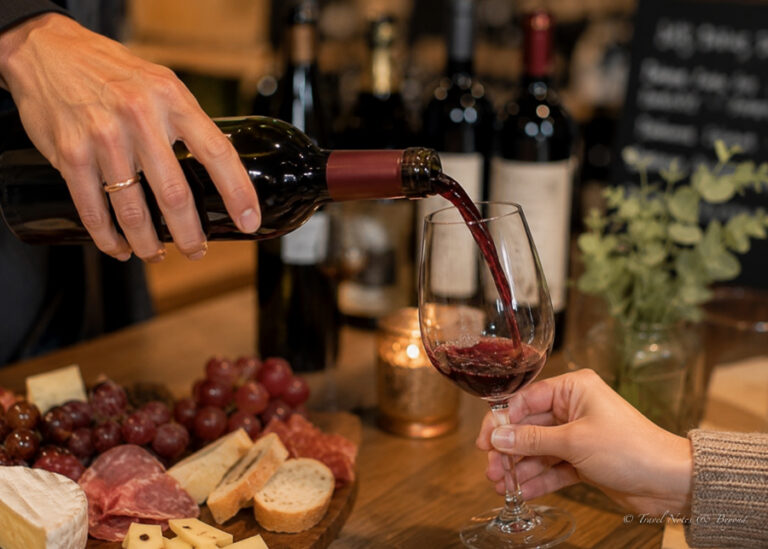
For desert, you’ll always have “cozonaci” (a cake filled with nuts and raisins) and other delicious sweets. And to wash all this rich food down, Romanians will have lots of red wine and “tuica” (a strong traditional spirit that contains 40-45% alcohol and is made from plums).

YOU MAY ALSO LIKE:
Some of the pages and posts of this blog contain links to products and services that may be useful for my readers. When clicking on these links you will have the option to purchase or register for a service at no extra cost to you, but doing so can help me offset the costs associated with running this blog. Thank you for your support!



Looks like it’s been a few years since this post, but I came across it as I was searching for Romanian Christmas traditions today. Very helpful, thank you!
The Christmas traditions in Romania are wonderful. It must be a very special time of year.
Thanks for this awesome Post.
Nice “collection” of Christmas traditions and it seems everyone loes to read about them. I would only add that the “piftie” dish is not made for Christmas in all regions. Here, in Transylvania, we usually make piftie for the “Boboteaza” holiday, on January 6.
You may be right, Luminita. I lived in Bucharest and people there kind of mix up these traditions. Thanks for visiting my blog.
I always enjoy learning about traditions from other countries. Thanks so much for sharing Romania’s. There are some customs that I am familiar with. I didn’t realize that pork was such a beloved meat there. I bet after fasting that multi-course meal is a real celebration of food and family.
I’m a big ol’ Scrooge when it comes to Christmas, but holiday traditions are always fascinating (especially when they involve food). Good thing I really love pork!
Thanks for taking time to read my post and comment on it, Efrain. I think you would have a blast visiting Romania at Christmas time, even though you are not big on this holiday.
Hi Anda,
Wonderful pictures. My grand dad was Romanian and although he was Orthodox he was not too religious. Never saw his fast at all 😉 Rough stuff with the pig but these are traditions many cultures follow. I recall seeing a pig being slaughtered in the jungles of Costa Rica, squealing like made. I looked on although highly unpleasant but my wife – especially because she is a vegetarian – could not take it. Loving the traditions from my 1/4 heritage 🙂
Ryan
So good to discover you are 1/4 Romanian, Ryan. Did you every think of going to Romania? Maybe you still have some far away relatives there.
I used to follow all these traditions when I was a kid (fasting, caroling, etc) but as I grew older, I also grew out of them. Now I have other traditions that I hold dear, for instance every Christmas, mom and I bake funny animal shaped biscuits. 🙂
Ah, so you like baking, Vlad? Or it is more of a bond with your mom, something that draws the two of you closer?
I do like baking a lot, it’s fun and it never fails to lighten my mood. As long as I get the recipe right, haha
I always wonder if, even in the old days when parents were harsher, if kids actually got sticks. Germans also celebrate this day, usually with candy and oranges in their shoes I think. Then when Father Christmas comes around on the 24th, he actually tells the kids how their doing — you’re getting better at hand washing Peter, but you need to work on your math!
Believe it or not one year my parents left sticks in my our boots. We had been very bad the past few months and they wanted to teach us a lesson, but in the end their disappointment was bigger than ours.
Great post. It’s wonderful to see the different traditions in different countries. My husband is Dutch and St Nicholas day is on December 5th. Maybe it takes St Nick and extra day to get to Romania.
Ha,ha,ha!This only tells me that St. Nicholas day may actually be a ‘borrow’ tradition.
I love reading about different Christmas traditions. I think I need to have a Christmas in Romania, Anda
You would definitely enjoy it, Paula.
Christmas in Romania sounds delightful. I recently attended an eastern orthodox christening. Like the Christmas you describe it was both familiar and unfamiliar.
I agree, Lyn, what’s so familiar to some people may sound so strange to others.
So interesting to learn about Romania’s holiday traditions! Some sound very similar to here in Germany! It’s been incredibly fascinating to learn about the German traditions since I’ve lived in Germany. #TheWeeklyPostcard
Germans have very beautiful Christmas traditions. Some of them have been borrowed by the Romanians in Transylvania because there were very many Germans there.
Anda, I would love to experience this some day, even the pig slaughtering believe it or not. I love seeing how other countries celebrate the various holidays. Every country is so unique. Do you miss Romania at Christmas?
I do, Corinne. I especially miss having all my family together. Now we are spread all over the world and that makes it very difficult to get together.
This was a wonderful read and always enjoy learning about holiday traditions from other countries. I’m usually not much of a pork eater but all that food you described for the feast sound delicious. I’m betting my kids wish we had boots for St Nicholas tradition.
So in Romania St Nicholas arrives on December 6th and Santa Claus on December 25th. Is that right? In Puerto Rico, Santa arrives on Dec 25 and The Three Wise Men on January 6th. The picture of the pig reminds me of the way pigs are killed in Puerto Rico. There is even a popular Christmas song that describes how a pig is killed for the festivities. People sing it in our version of “caroling.” #TheWeeklyPostcard
It’s so interesting to see so many similarities between these two very different cultures. Makes you wonder where the originated.
I like that some of the traditions seem really familiar to me and that others are so different. The fasting reminds me more of Lent than of Christmas. I’m guessing they don’t put on as many holiday season pounds (or kg). I remember one of my Facebook friends who was new to Romania posting how loud and horrid the pig slaughtering sounds were. She tried to turn up the TV really loud so that her young kids wouldn’t hear it.
I agree, Michelle. To me that custom is quite horrific, but unfortunately it’s still widely practiced in Romania.
I so enjoyed this post, Anda! (The top photo is lovely. Did you take it?) One line stuck out as particularly interesting to me: “During the Communist era the religious meaning of Christmas was banished. ‘Christmas Time’ became ‘Winter Celebrations…” This sounds so familiar to how things have become in the U.S. where schools can no longer have Christmas parties or programs and they must be called something similar to what you said. Store clerks and ads say “Happy Holidays” instead of “Merry Christmas” for fear of offending someone, etc. Despite the political correctness that seems to reign here, I am glad I am still free to wish you a “Merry Christmas!”
Good point, Debbie. It’s worrisome to see that our country it’s becoming so “politically correct” that it’s ready to mop under the rug all these traditions. And when you think that America was founded on religious freedom …
It is so nice to read about the holiday traditions in other countries, such as those in Romania. I am so happy to hear that so many of these have survived over time. Would love to visit some day!
Very interesting article. Christmas traditions in Romania are very similar to Polish tradition.
So I hear. It shouldn’t be surprising however, given the proximity of these two countries.
Enjoyed this post so much, Anda! Made me miss my first winter visit to Prague…many years ago! Thanks for sharing this inside look at Romanian traditions.
Thank you, Shelly. I hear Prague has very similar customs in winter.
I enjoyed reading about Romanian Christmas traditions. It is always interesting to find out about different traditions. The feast sounds great, although I don’t think I’d manage the forty days of fasting before it.
They consider it fasting the fact that do not eat any meat or dairy products during these 40 days however they allow fish twice a week and vegetal
Love the color, the sense of community. So glad the traditions can be followed freely again. Thanks for sharing, Anda.
The Christmas traditions in Romania are wonderful. It must be a very special time of year and I am happy to see that it survived the communist regime.